Mold Removal in Fat City, LA
Fat City is the dense block of 1970s apartment buildings, condos, and converted commercial space between Veterans and West Esplanade, behind Lakeside. The buildings are flat-roofed, slab-on-grade, cooled by rooftop or closet units feeding long duct runs, and mostly rented. A leak from the unit upstairs, a wall unit dripping inside the wall, a bathroom with no fan — the problems are small and close together.
We remove mold in Fat City. Call and tell us what you see or smell and what got wet. Reach us and you’re connected right away; catch us on a job and you’ll get a scheduled callback from a number you’ll recognize.
Mold in Fat City
Because so much of Fat City is rented, these calls often involve a landlord and a tenant. Louisiana landlords carry a warranty against defects whether or not they knew, and tenants can’t withhold rent, so the quickest route for both is a documented removal. The typical job is bathroom mold removal, and the written report settles the conversation.
Mold In Fat City? Start With A Call
Say where you see it or smell it, what got wet, and about when it started. Removal and remediation only — we don’t test or assess.
Landlord or tenant in Fat City? Call and say which.
Services Available in Fat City
Bathroom Mold Removal
A ceiling that stays spotted over the shower, a soft wall behind the tub, a cabinet floor under the sink. The dampest room in a house that never gets a dry day, and the removal that holds once the water stops.
HVAC and Duct Mold Remediation
Metairie cooling systems run almost all year, and the smell that shows up when the air kicks on has a source. Growth at the coil, in the plenum, or in wet insulated duct — cleaned or replaced so the system stops moving it around.
Crawl Space Mold Remediation
Raised houses in Old Metairie, Harahan, and old Gretna sit over damp ground with a high water table. Joists and subfloor cleaned, wet insulation out, and the space set up to stay drier.
Mold Odor Removal
That musty room, closet, or vent smells that way for a reason. We find the growth behind the smell and remove it, instead of masking it with a spray.
Mold Removal
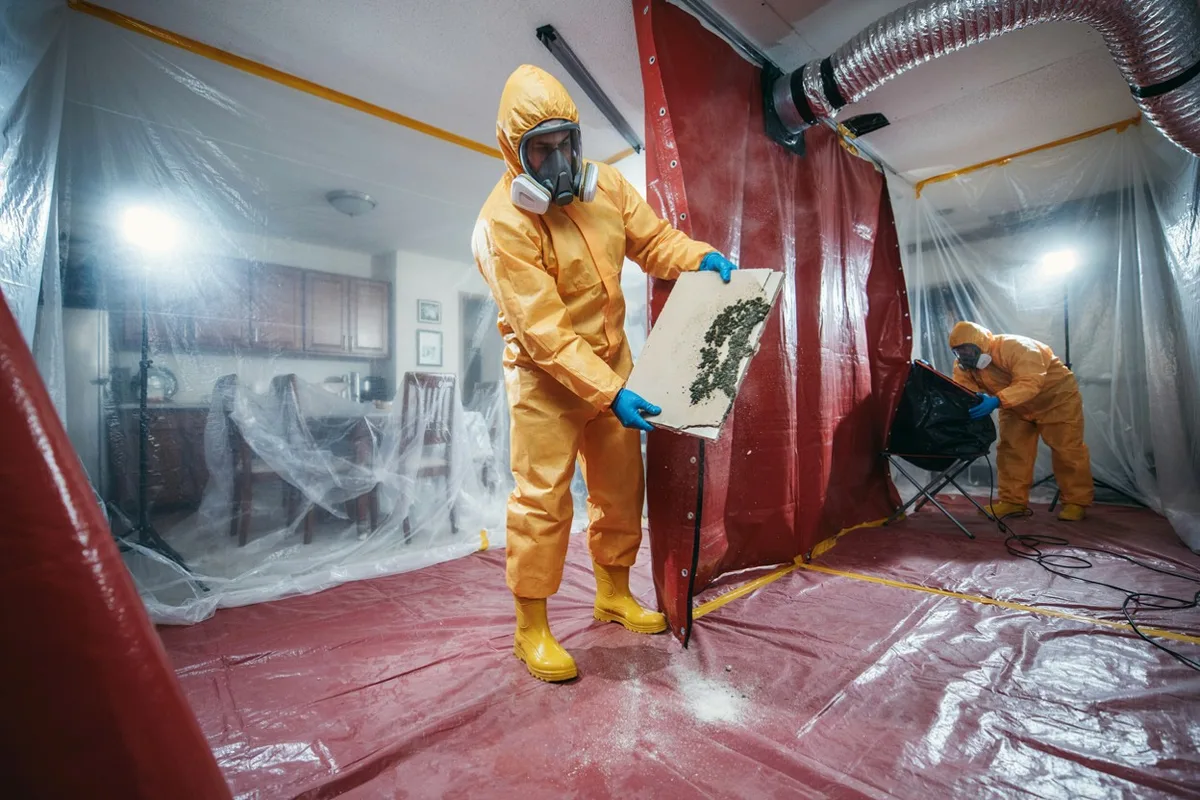
Contained work area under negative pressure, wet drywall, trim, and insulation out, framing cleaned and dried before anything closes back up — and a written report of what came out.
Black Mold Removal
Dark growth on drywall, ceilings, or baseboards gets removed the same careful way as any other mold. CDC says the type doesn’t change the job; the moisture behind it is what matters.
Whole-Home Mold Remediation
When growth runs through several rooms after a flood, a long leak, or a house that sat closed up after a storm — containment, removal, and cleaning, room by room, on one plan.
Attic Mold Remediation
Staining on the roof deck and rafters from a roof leak, a bathroom fan venting into the attic, or an air handler sweating all summer — cleaned in place with the attic sealed off from the living space.