Mold Removal in Gretna, LA
Gretna is across the river from Metairie, the parish seat and the oldest town on the West Bank. The historic district near the ferry landing has 19th-century cottages and shotguns on brick piers; the rest is 1950s-to-70s slab ranches spreading south toward the Westbank Expressway. The levee held in 2005, so Gretna’s water problems are the ordinary kind: rain, plumbing, and ground that never drains all the way.
We remove mold in Gretna. Call and tell us what you see or smell and what got wet. Reach us and you’re connected right away; catch us on a job and you’ll get a scheduled callback from a number you’ll recognize.
Mold in Gretna
In the old part of town the calls are crawl-space smells and raised-floor leaks; in the newer part, slab-house bathrooms and attic air handlers. The one that comes up most is a musty smell nobody can place — mold odor removal. We open what has to be opened, find the growth, and remove it.
We Cover Gretna — Call Us Now
Say where you see it or smell it, what got wet, and about when it started. Removal and remediation only — we don’t test or assess.
Smell you can’t place in Gretna? Call and tell us where it’s strongest.
Services Available in Gretna
Bathroom Mold Removal
A ceiling that stays spotted over the shower, a soft wall behind the tub, a cabinet floor under the sink. The dampest room in a house that never gets a dry day, and the removal that holds once the water stops.
HVAC and Duct Mold Remediation
Metairie cooling systems run almost all year, and the smell that shows up when the air kicks on has a source. Growth at the coil, in the plenum, or in wet insulated duct — cleaned or replaced so the system stops moving it around.
Crawl Space Mold Remediation
Raised houses in Old Metairie, Harahan, and old Gretna sit over damp ground with a high water table. Joists and subfloor cleaned, wet insulation out, and the space set up to stay drier.
Mold Odor Removal
That musty room, closet, or vent smells that way for a reason. We find the growth behind the smell and remove it, instead of masking it with a spray.
Mold Removal
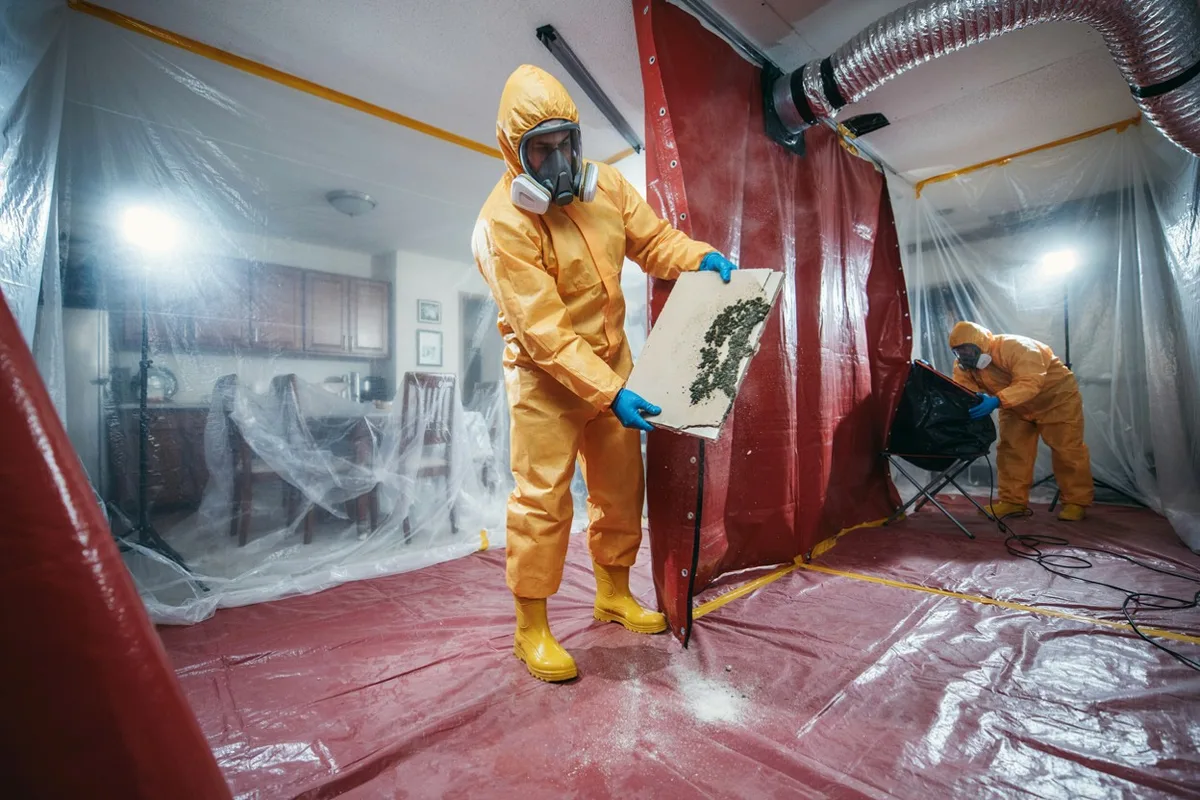
Contained work area under negative pressure, wet drywall, trim, and insulation out, framing cleaned and dried before anything closes back up — and a written report of what came out.
Black Mold Removal
Dark growth on drywall, ceilings, or baseboards gets removed the same careful way as any other mold. CDC says the type doesn’t change the job; the moisture behind it is what matters.
Whole-Home Mold Remediation
When growth runs through several rooms after a flood, a long leak, or a house that sat closed up after a storm — containment, removal, and cleaning, room by room, on one plan.
Attic Mold Remediation
Staining on the roof deck and rafters from a roof leak, a bathroom fan venting into the attic, or an air handler sweating all summer — cleaned in place with the attic sealed off from the living space.